What Is a FUPA? The Anatomy Behind the Term
If you’ve come across the term FUPA and wondered what it actually means beyond the internet slang, you’re not alone. FUPA stands for Fat Upper Pubic Area — the layer of subcutaneous fat that accumulates directly above the pubic bone, in a region that medicine calls the mons pubis. It sits between the lower belly and the genitals, and every human body has some degree of fatty tissue there. That’s not a flaw — it’s anatomy.
The mons pubis serves a real biological purpose. It cushions the pubic bone during physical activity, supports pelvic floor function, and in females, houses the tissue from which pubic hair grows during puberty. The problem people refer to as a FUPA is when that tissue becomes noticeably fuller, softer, or more prominent — creating a visible bulge in fitted clothing, swimwear, or athletic wear.
One distinction worth making early: FUPA fat is subcutaneous, meaning it sits just beneath the skin. That’s different from visceral fat, which wraps around internal organs deep in the abdomen. Subcutaneous fat in the pubic region is far less dangerous to health than visceral belly fat, though it tends to be stubbornly resistant to weight loss.
What Does a FUPA Look Like?
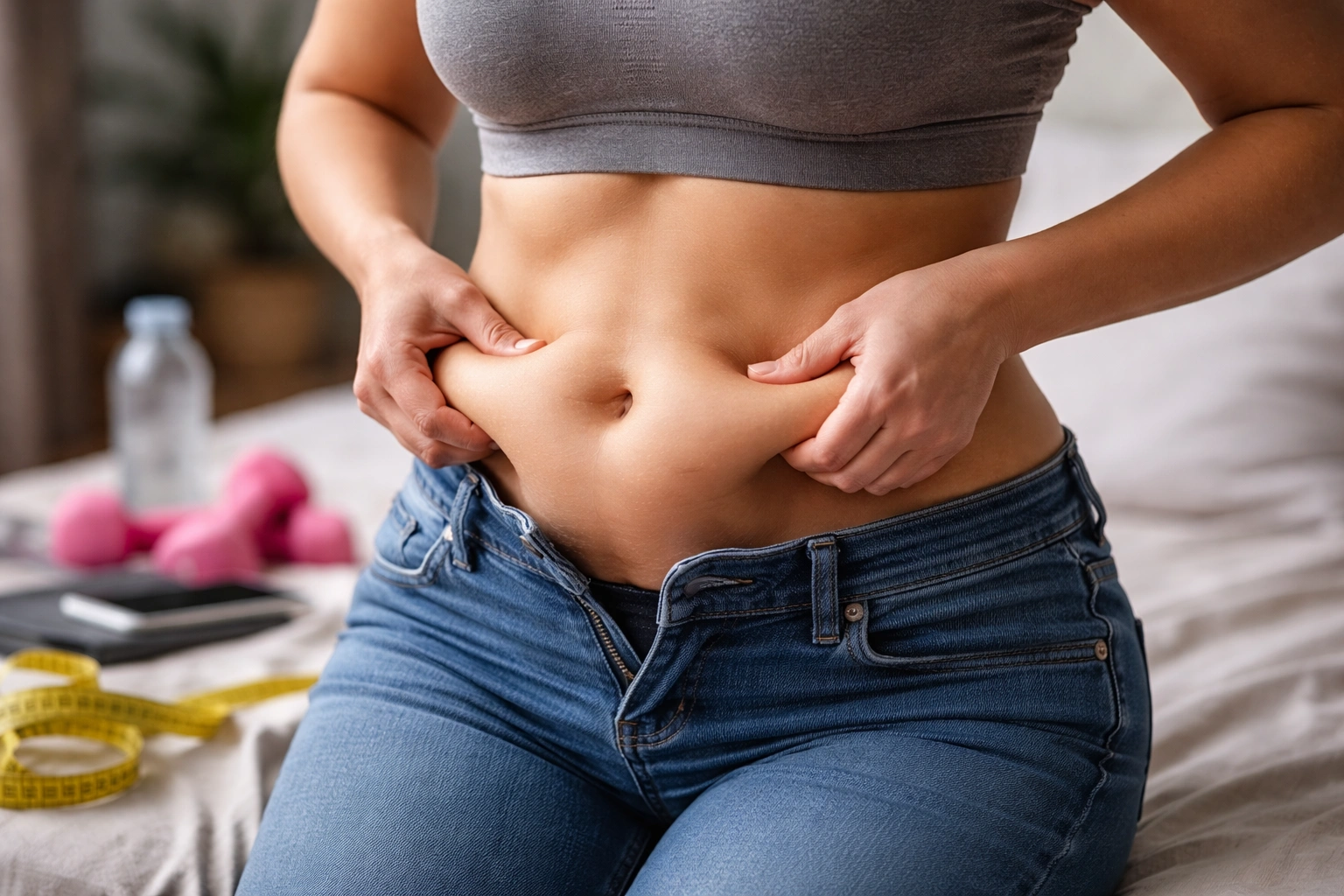
Appearance varies considerably from person to person. In milder cases, it’s a soft, rounded fullness just above the pubic bone that becomes visible in tight pants or a swimsuit. In more significant cases — often following substantial weight gain, pregnancy, or major weight loss — it can appear as a heavier, hanging fold of skin and fat.
Some people search for FUPA pictures to understand what to expect, but real-world presentations don’t always match exaggerated social media depictions. The authentic appearance depends on the individual’s body composition, skin elasticity, and whether the tissue is primarily fat or a combination of fat and loose skin.
A few things that influence how a FUPA looks visually:
- Fat volume vs. skin laxity — loose skin after weight loss creates a different appearance than a firm fat pad in someone at a stable weight
- Body frame and pelvis width — a wider pelvis may make the mons pubis appear more prominent even without excess fat
- Muscle tone in the lower abdomen — weakened core muscles after pregnancy allow the lower belly to push forward, making the pubic area appear more pronounced
What Does a FUPA Look Like on a Woman?
In women, the mons pubis is naturally larger and more cushioned compared to men, due to hormonal fat distribution driven by estrogen. A FUPA in women often appears as a soft pouch of tissue that creates a visible line when wearing fitted pants — sometimes called a “panty line bulge” even without underwear.
Post-pregnancy and after C-sections, the presentation changes. The combination of loosened abdominal muscles, stretched skin, and localized fat accumulation around the scar can create a shelf-like appearance just above the pubic area. This is sometimes called a C-section pouch and often persists even after losing pregnancy weight.
After menopause, estrogen levels drop and fat redistribution shifts toward the central abdomen — including the upper pubic area. Women who were never particularly affected by FUPA earlier in life sometimes notice it emerging in their late forties or fifties for this reason.
What Does a FUPA Look Like on a Man?
In men, fat tends to accumulate first in the abdomen due to testosterone-influenced fat distribution. A male FUPA is typically associated with central or abdominal obesity rather than isolated pubic fat. It appears as a lower belly protrusion that extends down toward the pubic region — often described as a “beer belly” that crowds the lower abdomen.
In more significant cases of obesity, a condition called buried penis can result, where excess fat and skin in the pubic and lower abdominal area covers the base of the penis. This isn’t a structural problem with the penis itself — it’s an anatomical crowding effect from the surrounding tissue. It can affect hygiene, urinary function, and sexual health, making it more than a cosmetic concern for some men.
What Does a FUPA Look Like Without Exercise or Weight Loss?
Without any fat reduction intervention, a FUPA tends to be soft, rounded, and persistent. It doesn’t typically flatten on its own. For people who have never exercised or who have had gradual weight gain over years, the tissue usually feels soft and moves freely — distinguishable from a firm abdominal wall by touch.
After significant overall weight gain, the fat pad can become heavier and more pronounced, sometimes extending downward. Without toning the lower abdominal muscles, there’s also no muscular structure pushing back against the fat pad, which allows it to appear larger.
How Do I Tell If I Have a FUPA?
Self-identification is usually straightforward. If you notice a soft bulge or pouch of tissue sitting directly above your pubic bone — not on the belly itself, but lower, closer to the waistband of underwear — that’s the area in question.
A few indicators to check:
- The bulge is soft and moves with you rather than feeling firm or rigid
- It’s more visible when sitting down than when standing
- It doesn’t coincide with pain, hardness, or rapid change in size (those would warrant a medical evaluation)
- It’s present even when your stomach appears relatively flat from the front
If the area feels hard, grows quickly, is painful, or appears to throb, those are reasons to see a physician. In rare cases, what feels like a fat pad could be a hernia, a cyst, or lymph node swelling. FUPA itself is soft, movable, and painless.
Why Does a FUPA Form? The Real Causes
Most coverage of FUPA stops at listing the usual suspects — weight gain, pregnancy, genetics. But the biology underneath is worth understanding, because it explains why targeted exercises don’t work for fat loss and why some people struggle to lose pubic fat even after they’ve lost significant weight elsewhere.
Genetics and Fat Distribution
Where your body stores fat is largely predetermined by genetics. The enzyme lipoprotein lipase (LPL), which regulates fat storage in different regions, is expressed differently depending on your genetic profile. People with higher LPL activity in the mons pubis region will store fat there preferentially — regardless of their diet or exercise habits. This is why someone of a healthy weight can still have a noticeable FUPA while others with higher overall body fat don’t.
Hormonal Influence
Estrogen drives fat accumulation toward the lower body — hips, thighs, and the upper pubic area. This is why FUPA is more commonly discussed in women, though not exclusive to them. Conditions like polycystic ovary syndrome (PCOS) and hypothyroidism can amplify this tendency by disrupting hormonal balance and increasing overall fat storage. Menopausal hormonal shifts redirect fat storage toward the abdomen, which includes the mons pubis region.
Pregnancy and Postpartum Changes
Pregnancy physically stretches both the abdominal wall and the overlying skin. After delivery — particularly C-sections — scar tissue in the lower abdominal fascia can create structural changes that push tissue forward and downward. The lower belly muscles become separated (diastasis recti is common postpartum), reducing the muscular support that would otherwise keep the lower abdomen flat. The result is a persistent pubic pouch that can remain years after delivery.
Weight Fluctuations
Significant weight gain deposits fat in all subcutaneous regions, including the mons pubis. The challenge comes with weight loss — the body draws from fat stores in a genetically determined sequence, and many people find the upper pubic area is among the last to reduce. Losing large amounts of weight without surgical intervention often leaves loose skin behind, which can make the FUPA appear to worsen even as overall fat decreases.
Stress and Cortisol
Chronically elevated cortisol levels from long-term stress drive fat storage predominantly in the abdominal region. While the research is primarily focused on visceral fat, the lower abdominal area — including the upper pubic zone — is affected by cortisol-related fat accumulation patterns.
Will a FUPA Go Away as You Lose Weight?
This is one of the most frequently asked questions — and the honest answer is: sometimes, partially, but rarely completely without intervention.
Weight loss can meaningfully reduce pubic fat if the FUPA developed primarily from weight gain. As total body fat decreases, the mons pubis often reduces along with it. However, three factors complicate this:
- Spot reduction doesn’t exist — No exercise targets fat specifically in the upper pubic area. Fat is mobilized from across the body based on genetics, not based on which muscles are worked.
- Skin laxity doesn’t reverse with fat loss — If skin was stretched during pregnancy or obesity, losing the underlying fat doesn’t make the skin contract. The result can be a softer, smaller FUPA that still appears as a fold due to excess skin.
- Genetics may dictate it stays — For some people, the pubic area is simply a preferential fat storage site. Even at a low body fat percentage, residual fullness in this area may remain.
That said, overall fat reduction through a sustained calorie deficit combined with strength training is the most effective non-surgical approach. Expecting complete elimination without intervention is unrealistic for many people — and that’s not a personal failure.
How to Get Rid of a FUPA: What Actually Works
Non-Surgical Approaches
Overall Calorie Deficit
Fat loss requires a consistent energy deficit. No supplement, cream, or wrap changes this. A moderate deficit of 300–500 calories per day below your maintenance level supports steady fat loss without triggering hormonal adaptations that slow metabolism. Combined with adequate protein (around 1.6–2.2g per kg of body weight), this supports muscle retention during weight loss.
Cardiovascular Training
Cardio burns calories and contributes to the overall deficit needed for fat loss. The type matters less than consistency — whether it’s brisk walking, swimming, cycling, or jogging, the key is sustaining it regularly. Current guidelines recommend at least 150 minutes of moderate-intensity aerobic activity per week, and more if fat loss is the goal.
Lower Abdominal Strengthening
While spot reduction is a myth, strengthening the deep core muscles improves posture and muscular support of the lower abdomen, which can visually reduce the appearance of a FUPA even without fat loss. Exercises like planks, leg raises, dead bugs, and pelvic tilts are particularly relevant. They don’t burn the fat but they build the muscular foundation beneath it.
Pelvic Floor Rehabilitation
This angle is rarely discussed in FUPA content but is particularly important for postpartum women. Weakened pelvic floor muscles allow the bladder and uterus to drop slightly, which puts outward pressure on the lower belly. Pelvic floor physiotherapy can address this, reducing forward pressure that makes the FUPA appear more prominent.
Hormonal Evaluation
If fat accumulates persistently in the lower abdomen despite consistent lifestyle effort, it’s worth asking a physician to evaluate thyroid function, insulin resistance, and sex hormone levels. PCOS, hypothyroidism, and insulin resistance all alter fat distribution in ways that can make the pubic area a stubborn target. Treating the underlying condition often allows fat loss to resume more effectively.
Can a FUPA Go Away Without Surgery?
Yes — for those whose FUPA developed primarily from weight gain without significant skin stretching. Sustained fat loss across the body will reduce pubic fat along with the rest. The timeline varies, but meaningful reduction is realistic with a 10–15% total body weight reduction in most cases.
For FUPA that involves skin laxity — from pregnancy, a C-section, or post-bariatric body changes — surgery is typically the only way to address the loose skin component. Fat can be reduced with lifestyle changes; skin cannot be retracted without intervention.
Surgical Options
Liposuction (Mons Pubis)
Suitable when skin elasticity is good and the primary issue is excess fat volume. A cannula is used to remove subcutaneous fat from the mons pubis. Recovery is generally 1–2 weeks before returning to light activity. Results can be significant, but loose skin won’t improve and may worsen without skin removal.
Monsplasty (Pubic Lift)
This procedure removes both excess fat and skin from the upper pubic area. It’s often performed after weight loss or post-pregnancy to restore contour to the lower abdomen and pubic mound. Scarring is typically placed at the hairline for concealment.
Abdominoplasty (Tummy Tuck)
When the FUPA coexists with diastasis recti (separated abdominal muscles), significant loose skin of the lower abdomen, and pubic fullness, a tummy tuck addresses all of these simultaneously. Muscle repair, skin removal, and fat reduction are combined in one procedure. Recovery is longer — typically 4–6 weeks — but results are comprehensive.
Non-Surgical Body Contouring
Treatments like cryolipolysis (CoolSculpting) or laser lipolysis can reduce fat volume in the upper pubic area without surgery. Results are more modest and typically require multiple sessions. These are best suited to people with good skin elasticity and mild to moderate fat excess.
FUPA Before and After: What Realistic Results Look Like
A common misconception driven by before-and-after images online is that FUPA elimination is dramatic and total. In reality:
- Lifestyle changes produce gradual, proportional results — the pubic area reduces alongside the rest of the body
- Non-surgical treatments offer modest contouring changes, not transformation
- Surgery produces the most visible and targeted improvement, but recovery, scarring, and cost are real factors
Realistic timelines for non-surgical reduction range from 3–6 months of consistent effort before meaningful visible change, depending on starting point and genetics.
The Psychological Weight of FUPA
Something that doesn’t get enough clinical attention: the psychological impact of being uncomfortable with this part of the body is real and valid. Clothing avoidance, reduced intimacy, persistent body checking — these are reported experiences, not vanity. Addressing the psychological dimension through body image therapy, alongside any physical intervention, often produces better overall outcomes than addressing anatomy alone.
The internet’s framing of FUPA as something shameful or comedic has caused real harm. Medically, it’s a normal anatomical feature that varies in degree. Personally, if it causes you distress, that’s reason enough to address it — without needing to justify the decision to anyone.
The bottom line
A FUPA is simply subcutaneous fat above the pubic bone — present in every human body to some degree, influenced heavily by genetics, hormones, and life events like pregnancy. It isn’t dangerous on its own, and it isn’t a reflection of willpower or discipline. For those who want to reduce it, a sustained calorie deficit with strength training is the most evidence-based starting point. For persistent cases involving skin laxity or genetic fat storage patterns, surgical options exist and are effective. What matters most is making an informed decision from a place of accurate information — not social media pressure or shame.




 News2 years ago
 Lifestyle3 years ago
 Lifestyle4 years ago
 Wealth2 years ago