
Lifestyle
What to Wear to a Funeral: The Complete Dress Code Guide for Every Situation

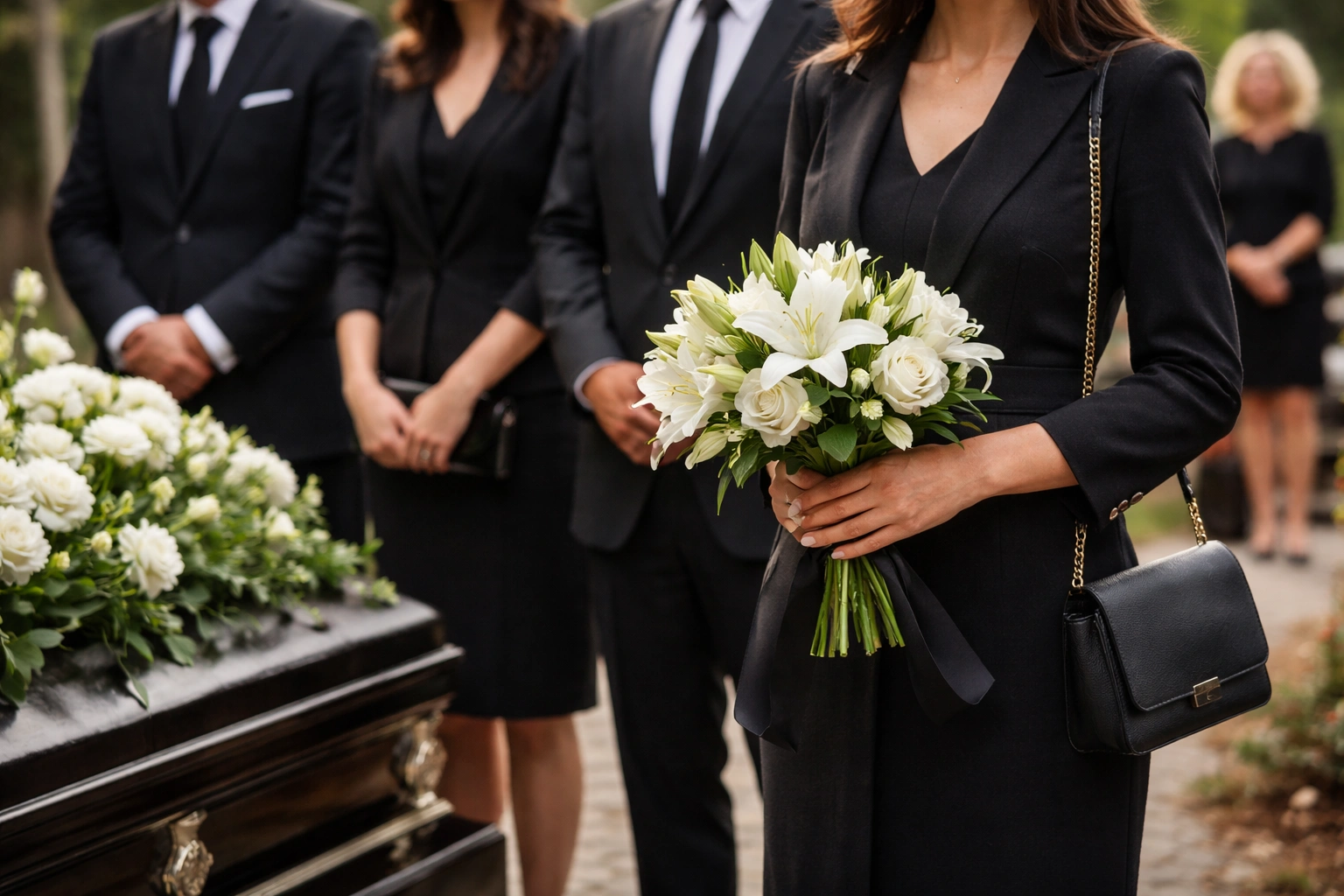
Table of Contents
What to Wear to a Funeral
Choosing what to wear to a funeral is one of those tasks nobody thinks about until they’re standing in front of their wardrobe at 7 AM, running late, and second-guessing every item on the hanger. The discomfort is real — and it says something worthwhile about you that you care enough to get it right.
Funeral attire is not about fashion. It never has been. It’s a visual language, a way of communicating without speaking — of telling a grieving family that you showed up, that you take this seriously, that the person they lost mattered to you too. Getting dressed for a funeral is an act of solidarity.
The good news: the rules are simpler than they seem, and they’re more flexible than they used to be. Here’s everything you need to know, broken down by gender, season, service type, and situation.
The Core Rule That Overrides Everything Else
Before any specific guidance, one principle governs all of it: follow the family’s wishes. If the obituary says “wear blue,” wear blue. If the invite says “come as you are,” take that at face value. A family requesting bright colors or casual attire at a celebration of life is honoring their loved one’s personality — respecting that request is the most considerate thing you can do.
When no dress code is mentioned, default to conservative and subdued. You cannot go wrong being slightly overdressed at a funeral. You can absolutely go wrong showing up in neon.
What Is the Appropriate Dress Code for a Funeral?
The standard across most Western traditions is business-appropriate attire in dark, muted tones. Think of how you’d dress for an important meeting or a formal church service — that register is exactly right for most funerals.
Dark colors carry the weight of tradition here. Black remains the universal default, widely recognized as the color of mourning across many cultures. But it’s no longer the only acceptable option. Charcoal grey, deep navy, dark brown, and forest green all read as appropriately respectful. The key is that the palette stays subdued — nothing that catches the eye, nothing that competes with the gravity of the occasion.
Beyond color, fit and modesty matter. Clothing should be clean, pressed, and well-fitting. Revealing necklines, short hemlines, sheer fabrics, and anything tight-fitting are not appropriate — not because of outdated prudishness, but because the goal is to make yourself invisible in the best possible way. The focus belongs on the person being remembered, not on what you’re wearing.
What to Wear to a Funeral — Women
Women have more flexibility in what constitutes appropriate funeral attire, which can paradoxically make the choice harder. A few reliable frameworks:
Dresses and skirts should fall at or below the knee. Simple silhouettes in dark solids work best — a wrap dress in black or charcoal, a midi skirt paired with a plain blouse, or a structured sheath dress. Avoid anything sleeveless unless you’re layering a jacket or cardigan over it.
Trousers and pantsuits are entirely appropriate and often more practical, especially for graveside services where you may be standing on uneven ground. Dark tailored trousers with a modest blouse or a professional blazer are a solid choice that doesn’t read as underdressed.
Shoes should be closed-toe, low-heeled, and in a dark neutral. If the service involves outdoor grounds or a cemetery, heels are a genuine hazard — opt for flats or low block heels. Comfort matters here because funerals involve standing, walking, and sometimes long periods on your feet.
Accessories should stay minimal. A simple watch, small stud earrings, a plain necklace — nothing flashy, oversized, or attention-grabbing. A dark-toned handbag in a simple shape completes the look without drawing notice.
Outerwear should match the tone of the outfit. A classic trench coat, a dark wool coat, or a structured blazer all work. Avoid puffer coats or anything too casual in texture.
What to Wear to a Funeral — Men
For men, the baseline is clear: a dark suit with a collared dress shirt and a conservative tie. This combination works for virtually any traditional funeral service, regardless of denomination or formality level.
Suits in black, charcoal, or deep navy are the standard. If you own a dark grey or dark blue suit for work, that’s appropriate — you don’t need to buy something new. The suit should be clean and pressed. Fit matters more than label.
Shirts should be plain and collared. White and light blue are the most common choices under dark jackets. The shirt should be long-sleeved regardless of the temperature — short sleeves at a formal funeral service read as too casual.
Ties should be muted in pattern and dark in color. Solid ties in black, navy, grey, or burgundy are safe. Avoid novelty ties, bold prints, and anything with humor or graphics.
Shoes should be leather dress shoes in black or dark brown, polished and clean. Oxfords, loafers, or brogues all work. Sneakers, boots, and casual shoes are not appropriate at traditional services.
No suit? No problem. Dark slacks paired with a collared dress shirt and a blazer or dark sweater cover most situations where a full suit isn’t available. The combination reads as respectful without being inaccessible. What to avoid entirely: jeans (even dark ones), polo shirts as a standalone option, and anything with visible logos or graphics.
What to Wear to a Funeral — Not Black
Black is traditional, but it is not mandatory in most settings. The actual requirement is that clothing be dark, subdued, and respectful — and there are several colors that satisfy all three criteria without being black.
Navy blue may be the strongest alternative. It reads as serious and formal, pairs well with most accessories, and is widely accepted across cultures and denominations.
Charcoal grey works equally well — darker than medium grey, which can appear casual, but not as stark as black.
Deep burgundy, forest green, and slate blue are acceptable in many modern or less formal services, particularly celebrations of life. These colors are subdued enough not to be distracting while offering a small degree of personality.
What to avoid when not wearing black: anything bright, anything pastel, and anything that reads as festive. Yellow, orange, hot pink, and red are universally considered inappropriate unless the family has specifically requested them. White can work as an accent piece — a white shirt under a dark jacket, for example — but an all-white outfit sends mixed signals in a Western context, even though white is the color of mourning in several Asian traditions.
What to Wear to a Funeral — Men Without a Suit
Not owning a suit is more common than funeral etiquette guides tend to acknowledge. The good news is that a full suit is not a strict requirement at most modern funeral services.
The alternative formula: dark trousers + collared shirt + layer. Dark dress trousers or chinos (not jeans), a plain button-down or dress shirt, and a dark blazer, sport coat, or even a neat crewneck sweater over a collared shirt. This combination is understated and respectful without requiring formalwear.
What matters most is that the components are clean, fitted, and free of graphics or casual detailing. A well-pressed pair of dark chinos with a tucked-in dress shirt and a navy blazer will be received better than an ill-fitting or wrinkled suit at any service.
What to Wear to a Funeral — Casual Services
Some services are intentionally less formal — outdoor memorials, celebrations of life, or small gatherings in non-traditional venues like a family home, a park, or a restaurant. In these settings, the dress code relaxes, but “casual” still has a ceiling.
Think polished casual: clean dark jeans (if the invite genuinely signals casual), a neat collared shirt or structured top, and tidy footwear. Even at the most relaxed memorial, graphic tees, athletic wear, flip-flops, and shorts are off the table. The bar for “respectful” doesn’t disappear — it just shifts.
If you’re uncertain whether a service is genuinely casual or if the description is a polite gesture from the family, dress one level more formal than you think you need to. Arriving slightly overdressed at a relaxed gathering is forgiven immediately. Arriving in gym clothes at a formal service is not.
What to Wear to a Funeral — Winter
Winter funerals introduce a practical layer (literally) to the question of what to wear. Staying warm without abandoning the appropriate tone requires some planning, particularly for graveside services where you may be standing outside for an extended period.
Layering is the most effective strategy. A thermal undershirt beneath a dress shirt, dark wool tights under a skirt or dress, and a classic overcoat over the full outfit — each layer can be removed once indoors without disrupting the overall look.
Coats should follow the same muted palette as the outfit underneath. A long wool coat in black, charcoal, or navy reads as both warm and appropriate. Avoid brightly colored puffer jackets or anything with heavy logos across the chest.
Footwear deserves extra thought in winter. Heels on icy ground are genuinely dangerous at outdoor services. Dark ankle boots with a low block heel, or clean leather oxfords with a dress trouser, offer both warmth and traction without sacrificing the overall formality of the outfit.
Scarves, gloves, and hats in dark, subdued tones are completely acceptable at outdoor services. A dark wool scarf or a plain navy beanie is practical and unobtrusive. Avoid brightly colored accessories even in cold weather.
What to Wear to a Funeral — Kids
Children are generally held to a more relaxed version of the same standard as adults: neat, modest, and in darker or neutral tones.
For boys, dark trousers with a collared shirt — button-down, polo, or dress shirt — are a reliable baseline. A small blazer or sweater layer elevates the look without requiring a full suit.
For girls, a simple dress or skirt paired with a modest top works well. Knee-length or longer hemlines, covered shoulders, and nothing with bright colors or bold patterns.
For younger children and toddlers, perfect formality isn’t realistic or necessary. Clean, plain clothing in dark or neutral tones — navy, grey, black, or white — signals appropriate effort without imposing adult dress requirements on small kids. If a toddler needs a comfort item, that’s fine. The goal is helping them be present and settled, not picture-perfect.
For teenagers, adult guidelines apply as closely as possible. Ripped jeans, graphic tees, and bright sneakers are not appropriate at traditional services, regardless of how common they are in daily life.
What Is Not Okay to Wear to a Funeral?
There’s a shorter list than people expect, but the items on it matter:
Casual clothing — jeans of any wash, t-shirts, shorts, tank tops, and athletic wear. These communicate indifference to the formality of the occasion, regardless of intent.
Revealing clothing — low necklines, short hemlines, tight silhouettes, crop tops, and anything sheer. The principle is modesty, not prudishness.
Loud patterns and graphics — animal prints, large florals, novelty prints, and anything with text or visible logos. Even in light colors, busy patterns are distracting.
Casual footwear — sneakers, flip-flops, sandals, and sports shoes. These are the single most common mistake and the most visually obvious.
Oversized accessories — large statement jewelry, oversized hats, bulky bags, or anything that draws attention to itself rather than disappearing into the outfit.
What 3 Colors Not to Wear to a Funeral?
If you need a practical shortcut, these are the three color categories consistently flagged across Western funeral etiquette:
- Red — In most Western contexts, red signals passion, celebration, and energy. At a Chinese funeral, it explicitly represents happiness and is considered deeply inappropriate. In almost every cultural framework, red at a funeral is the hardest color to justify.
- Bright yellow or orange — These are the colors of optimism and vitality, which are precisely the tones a funeral service is not meant to project. They read as festive rather than somber and pull focus in a way that feels disrespectful even without intent.
- Neon or fluorescent shades of any color — Including neon green, electric blue, or hot pink. The issue isn’t the specific hue but the intensity. Neon reads as casual and attention-seeking — the opposite of what funeral attire is meant to do.
The exception to all of the above: if the family specifically requests these colors, honor that request. A family asking for bright colors to celebrate a life is exercising their right to grieve on their own terms.
How to Look Classy at a Funeral
Looking polished at a funeral doesn’t require expensive clothing. It requires deliberate clothing. A few principles that separate composed from careless:
Fit over price. A well-fitting dark blazer from a mid-range retailer looks more appropriate than an expensive but ill-fitting designer piece. Press everything. Clean everything. Nothing communicates “I made effort” more clearly than a wrinkle-free outfit.
Restraint with accessories. One or two simple pieces — a plain watch, small earrings, a minimal necklace — are more elegant than a full set of statement pieces. Less is nearly always more at a funeral.
Shoes matter more than most people realize. Scuffed, casual, or inappropriate footwear undermines an otherwise well-considered outfit instantly. Clean, polished, and appropriately formal shoes close the look.
Avoid the word “interesting” as a design principle. Interesting clothing at a funeral is almost always a misstep. The goal is to be unnoticeable in a positive way — to communicate presence and respect, not personality.
Cultural and Religious Variations Worth Knowing
Funeral dress codes are not universal, and assuming Western norms apply to every service you attend is a meaningful oversight.
At Hindu and Buddhist ceremonies, white is frequently the color of mourning — not black. Attending in an all-black outfit at a Hindu funeral may read as unusual or out of place to the family.
At Jewish services, modest attire is expected. Men may be asked to wear a kippah. Women are generally expected to cover their arms and avoid anything revealing. Muted colors across the board are appropriate.
At Islamic funerals, modesty is the primary requirement. Women should wear loose, long-sleeved clothing and may be expected to cover their heads as a sign of respect. Men should wear simple, modest clothing in muted tones.
At Catholic services, formal dark attire remains the expectation. Other Christian traditions vary more — some follow a relaxed dress code, while others maintain very traditional standards.
At African and Caribbean celebrations of life, bright colors are often not just acceptable but expected and requested. These services honor the deceased through vibrancy, not solemnity, and showing up in subdued tones may feel out of step with the family’s intentions.
When in doubt about a cultural or religious context you’re unfamiliar with, conservative and modest is always the safer choice. And it is always appropriate to quietly ask a family member or the funeral director what the expectations are.
The One Question That Simplifies All of This
If you’re still unsure what to wear after reading everything above, ask yourself this: Would this outfit allow me to disappear into the room — to be present without being noticed?
If the answer is yes, you’re dressed appropriately for a funeral.
If you find yourself wondering whether the outfit is “too much” — too colorful, too casual, too tight, too loud — it probably is. Step back one register toward plain, dark, and modest, and you’ll be fine.
Funerals are not about what you wear. They’re about why you showed up. Dressing well is simply the quiet proof that you understood what you were walking into.
The most important thing you can bring to a funeral isn’t a particular color or a specific garment — it’s the understanding that your presence matters more than your outfit. Dress to show that you took the occasion seriously, and then let your attention go entirely to the people in that room who are grieving.

How to Wash a Weighted Blanket Safely (Complete 2026 Guide)

How Many Keys on a Piano? 88 Keys, Sizes & Beginner Guide

What to Wear to a Funeral: The Complete Dress Code Guide for Every Situation

What Is a FUPA? Causes, Appearance, and How to Actually Get Rid of It

What Is a Truffle — The Underground Delicacy That Commands More Than Gold

What Are the Two Starting Materials for a Robinson Annulation?

What Is a Riser Desk? Types, Benefits, and What No One Tells You

How Do I Open a Wine Bottle Without a Corkscrew?

Jumbo Box Braids: A Complete Guide to the Trendy 2025 Protective Hairstyle

How Coffee Cups Have Changed Over Decade
How Do I Open a Wine Bottle Without a Corkscrew?
What Is a Riser Desk? Types, Benefits, and What No One Tells You
What Is a Truffle — The Underground Delicacy That Commands More Than Gold
How Many Keys on a Piano? 88 Keys, Sizes & Beginner Guide
What Are the Two Starting Materials for a Robinson Annulation?
What Is a FUPA? Causes, Appearance, and How to Actually Get Rid of It
What to Wear to a Funeral: The Complete Dress Code Guide for Every Situation
How to Wash a Weighted Blanket Safely (Complete 2026 Guide)
How to Wash a Weighted Blanket Safely (Complete 2026 Guide)
How Many Keys on a Piano? 88 Keys, Sizes & Beginner Guide
What to Wear to a Funeral: The Complete Dress Code Guide for Every Situation
What Is a FUPA? Causes, Appearance, and How to Actually Get Rid of It
What Is a Truffle — The Underground Delicacy That Commands More Than Gold
What Are the Two Starting Materials for a Robinson Annulation?
What Is a Riser Desk? Types, Benefits, and What No One Tells You
How Do I Open a Wine Bottle Without a Corkscrew?
Jumbo Box Braids: A Complete Guide to the Trendy 2025 Protective Hairstyle


